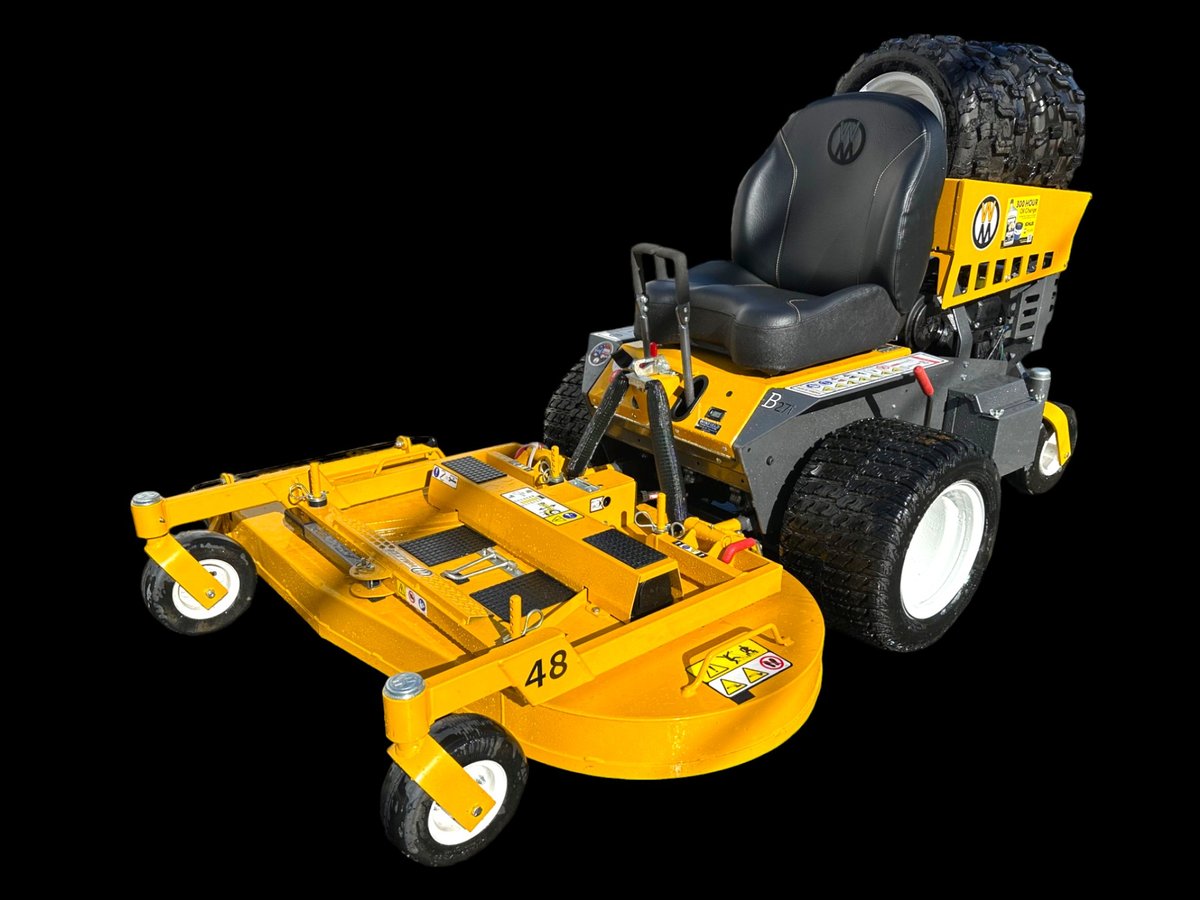
When the conversation turns to maintaining expansive lawns or professional landscapes, serious enthusiasts and pros often ask: how do Walker Zero Turn Mowers compared to competitors truly stack up for peak performance? Walker has carved out a niche as a premium brand, renowned for its cut quality and collection systems, but the zero-turn market is bristling with formidable contenders offering diverse features, price points, and capabilities. Choosing the right machine means cutting through the marketing hype to understand what genuinely delivers the best results for your specific needs.
This isn't just about horsepower; it's about the entire mowing experience, from the feel of the controls to the precision of the cut and the long-term durability that keeps your investment paying off. We’ve broken down the key factors, put top models head-to-head based on rigorous testing, and distilled the insights you need to make an informed decision.
At a Glance: Key Takeaways for Your Zero-Turn Search
- Zero-Turn Advantage: ZTRs offer unmatched maneuverability, faster mowing speeds, and superior striping capabilities compared to traditional lawn tractors.
- Engine Power Matters: 20-25 HP is standard for residential, over 25 HP for commercial. Match engine size to your yard's terrain and grass density.
- Deck Durability: Fabricated decks (welded steel) are more robust for large, uneven properties than stamped decks (lighter gauge steel).
- Transmission is Key: Look for higher Hydro-Gear series (e.g., ZT-3100+) for heavier loads and commercial use.
- Comfort Counts: High-back seats, suspension, and vibration dampeners reduce fatigue during long mowing sessions.
- Walker's Reputation: Known for exceptional cut quality, collection systems, and durable construction, often positioning it at the higher end of the market.
- Top Competitors: Brands like Husqvarna, Cub Cadet, Toro, eXmark, and Stihl offer strong alternatives across entry-level, value, and commercial segments.
- Maintenance: ZTRs are more complex than push mowers, requiring regular checks and annual blade/belt maintenance.
The Zero-Turn Revolution: Why Precision Matters
Zero-turn mowers, or ZTRs, have fundamentally changed how many approach lawn care. Forget the wide turning circles of traditional lawn tractors; ZTRs give you the power to pivot 180 degrees on a dime, thanks to independent control over each drive wheel, typically via a pair of lap bars. Push both forward, you move ahead. Pull one back, push the other forward, and you're spinning in place. This mechanism isn't just a novelty; it translates directly into significant advantages:
- Unmatched Maneuverability: Easily navigate around trees, garden beds, and intricate landscaping features without leaving uncut strips.
- Faster Mowing Speeds: Cover more ground in less time, often with top speeds ranging from 5 to 12 mph.
- Precision Cuts & Striping: Achieve professional-looking stripes with ease, laying down crisp lines as you mow.
- Clear Forward View: Unlike tractors where the engine often obstructs your view, ZTRs provide an unobstructed sightline, enhancing safety and accuracy.
Most gas-powered ZTRs rely on hydrostatic transmissions, a robust system utilizing hydraulic fluid and pumps for seamless power transfer without the fuss of gear shifting. Electric models, on the other hand, employ individual electric motors for each wheel, offering a quieter, cleaner alternative.
Decoding Your Ideal Zero-Turn Mower: Key Buying Factors
Before diving into specific models, understanding what makes a zero-turn mower tick—and what factors are most critical for your needs—is essential. Our testing methodology focused on real-world performance across diverse conditions, evaluating everything from cut quality on uneven terrain to stopping readiness and service point accessibility.
Engine Power: The Heart of the Beast
The horsepower (HP) of your mower's engine dictates its ability to handle dense grass, slopes, and overall speed.
- Residential Use: Typically, engines between 20–25 HP are sufficient for smooth, well-maintained yards up to 2 acres. A 21 HP engine often hits the sweet spot for many homeowners.
- Commercial/Large Properties: For heavier use or properties exceeding 2-4 acres, engines over 25 HP provide the necessary muscle.
- The Trade-Off: Larger engines mean more fuel consumption, increased noise, and a higher price tag.
Electric Alternatives: Battery-powered ZTRs offer a quiet, emissions-free experience, perfect for noise-sensitive areas or those prioritizing environmental impact. However, they come with a higher entry cost, generally starting around $4,000 and climbing past $6,000 for higher-end models.
Cutting Deck: Width, Durability, and Precision
The cutting deck is where the magic happens, housing the blades that give your lawn its pristine look.
- Deck Width:
- Residential: 42 to 52 inches are common. A 42-inch deck is usually fine for a 2-acre lot, offering a good balance of coverage and maneuverability.
- Commercial: Can reach 60 inches or wider, covering vast areas quickly.
- Consideration: Wider decks cut faster but are more expensive, take up more storage space, and might not fit through narrower gates.
- Deck Durability: Stamped vs. Fabricated:
- Stamped Decks: Made from lighter gauge steel, these are common in entry-level and mid-range residential models. They're adequate for well-maintained, relatively smooth lawns.
- Fabricated Decks: Constructed from multiple pieces of thicker steel welded together, these decks are significantly more durable. They're recommended for large rural properties, commercial use, or uneven terrains where impacts are more likely, minimizing repairs and extending the mower's lifespan.
Transmission: The Unsung Hero
Most ZTRs utilize Hydro-Gear transmissions, known for their reliability. The series number (e.g., ZT-3100, ZT-3400) indicates its capacity. Higher series transmissions are designed to support heavier loads and longer runtimes, making them indispensable for commercial applications or properties with demanding conditions.
Fuel Capacity / Battery Life: Keeping You Going
A larger fuel tank translates to longer mowing sessions without the interruption of refueling. For electric models, battery capacity directly dictates runtime, with some high-end units capable of mowing 1.5 to 1.75 acres on a full charge. Always consider your property size and how frequently you're willing to pause for a charge or refill.
Top Speed: Covering Ground Safely
ZTRs can hit speeds from 5 to 12 mph. While faster speeds are appealing for large, open spaces, they can be challenging to control safely on slopes or in tight areas. It’s a balance between efficiency and control.
Cutting Height Range: Versatility for Your Lawn
Most zero-turns offer adjustable cutting heights, typically ranging from 1.0″ to 5.5″, allowing you to tailor your cut to grass type, season, and desired aesthetic.
Price Range: An Investment in Your Landscape
Expect to pay around $3,200-$3,500 for entry-level gas ZTRs with a 42-inch deck. High-end commercial units, designed for daily heavy use, can easily exceed $8,000. Electric models tend to sit at the higher end of the residential price spectrum.
Comfort Features: Enduring Long Mowing Sessions
Long hours on a mower can take a toll. Features like high-back seats, adjustable seat suspension, vibration dampeners, armrests, and foot-operated deck lifts significantly improve comfort and reduce fatigue, making the job more enjoyable.
Warranty: Protecting Your Investment
Residential models often come with 3–4-year warranties. Commercial units, designed for more rigorous use, may offer 2-year unlimited-hour coverage. Always check for hour caps, as these can limit coverage even within the stated timeframe.
Walker Zero-Turn Mowers: A Reputation for Excellence
Walker Mowers have cultivated a strong reputation, particularly among professionals and discerning homeowners, for delivering exceptional cut quality and superior grass collection. While the ground truth provided doesn't detail specific Walker models, general market knowledge highlights what typically sets them apart and where they stand in comparison to the broader market and competitors.
Walker mowers are often characterized by:
- Out-front Decks: Many Walker models feature an out-front deck design, which offers excellent visibility, allows for easier trimming under bushes, and is highly effective at collecting clippings.
- Precision Cut and Collection: They are celebrated for their ability to deliver a pristine cut and efficiently bag clippings, leaving a clean, manicured finish. This is a significant factor for those prioritizing aesthetics and a debris-free lawn.
- Heavy-Duty Construction: Often built with robust, durable components, Walker mowers are designed for longevity and demanding use, which contributes to their higher price point.
- Maneuverability in Tight Spaces: Their compact design, especially with the out-front deck, can make them exceptionally agile in complex landscapes.
When considering if a premium brand like Walker is right for you, it's worth asking Is a Walker zero turn worth it?. For many, the answer lies in the combination of cut quality, efficiency, and long-term reliability that justifies the investment, especially if you prioritize a flawless lawn and efficient cleanup.
How Competitors Stack Up: A Look at Top Zero-Turn Mowers
Now, let’s see how some of the leading zero-turn mowers in various categories compare, drawing from our testing and insights. This will help contextualize where a premium option like a Walker might fit into the broader landscape of choices.
Best Overall Performer: Husqvarna Xcite Z345
The Husqvarna Xcite Z345 stands out as a versatile mid-tier option, bridging the gap between serious homeowners and professional-level users.
- Engine: Powered by a robust Kohler 25-hp engine with a hydrostatic transmission, it offers ample power for challenging conditions.
- Construction: Its heavy-gauge fabricated deck, metal rear fenders, and metal engine cover speak to its durable build, ready for demanding tasks.
- Comfort & Control: Features like a 16-way adjustable seat suspension and a 12-position cut height dial (1.5 to 4.5 inches) enhance comfort and precision. The aggressive tire tread ensures excellent traction.
- Verdict: This mower is a strong contender for those needing a reliable, high-performing machine that can handle diverse terrains and regular use.
Best Entry-Level Gas: Cub Cadet Ultima ZT1
For homeowners taking their first step into zero-turn mowing, the Cub Cadet Ultima ZT1 offers an excellent balance of affordability, reliability, and ease of use.
- Engine: Equipped with a Kawasaki 21.5-horsepower gas engine, it delivers sufficient power for typical residential lawns.
- Deck: It features a stamped deck, which is suitable for smooth, well-managed yards of 1–2 acres.
- Speed: Capable of speeds up to 7 mph, it gets the job done efficiently.
- Verdict: An ideal choice for homeowners with mid-sized lawns who want the zero-turn advantage without breaking the bank. A 54-inch deck model is also available for larger properties.
Best Value Gas: Toro 77401 TimeCutter
The Toro 77401 TimeCutter offers solid performance at a competitive price point, making it a compelling value proposition for residential users.
- Engine: Features a 22-horsepower Briggs and Stratton gas engine, providing reliable power.
- Deck: Comes with a 42-inch deck, suitable for properties starting from half an acre and up.
- Price: Around $3,500, making it an accessible option for many.
- Features: Intuitive controls and three speed settings (Trim, Tow, Mow) add versatility. Testers noted it can be loud, suggesting hearing protection. Minor drawbacks included slightly out-of-sync lap bars (fixable) and the absence of seat height adjustment or an hour meter.
- Verdict: A strong choice for homeowners seeking a reliable, efficient zero-turn without premium features, willing to overlook some minor comfort aspects.
Best for Big Yards: Toro TimeCutter (Larger Model, e.g., 75755)
When your property stretches beyond 2 acres, a larger deck becomes a necessity. The larger Toro TimeCutter models, such as the 75755, are built for this challenge.
- Deck: A 54-inch fabricated steel deck means robust durability and wider cutting swaths.
- Engine: Powered by a Kawasaki 23-horsepower gas V-Twin engine, it provides the sustained power needed for extensive mowing.
- Features: Three blades ensure a consistent and efficient cut across large areas.
- Verdict: If you have 2–4 acres, this model provides the speed, power, and durability to tackle your landscape efficiently.
Best Durable Construction (Electric): eXmark Quest V-Series
For those prioritizing durability and a quieter operation, the eXmark Quest V-Series stands out, especially its electric variant.
- Deck: Its 42-inch fabricated steel deck epitomizes durability, ready to withstand rugged use.
- Power: Equipped with four 10-Ah batteries (expandable to six), it offers a solid runtime of 1.5 to 1.75 acres with a full battery set.
- Maneuverability: The smaller deck enhances maneuverability, making it excellent for tighter spaces while maintaining tough construction.
- Features: Its quiet operation is a significant advantage, though turf tires can sometimes spin on damp slopes.
- Verdict: An excellent, eco-friendly option for those needing a robust, quiet mower for mid-sized properties, especially where durability is paramount.
Best Commercial Grade: Stihl RZ 972i
At the pinnacle of commercial-grade performance, the Stihl RZ 972i is built for the most demanding professional applications.
- Weight & Power: Weighing over 1,600 pounds and boasting a 40-hp engine, this machine is a powerhouse designed for heavy-duty work.
- Deck Width: A colossal 72-inch deck width means it devours vast landscapes quickly.
- Speed: With a maximum speed of 12 mph, it excels in covering multiple acres with speed.
- Features: Four-wheel suspension and an adjustable suspension seat ensure operator comfort during long hours. However, its wide deck and suspension can sometimes lead to scalping on very uneven surfaces.
- Verdict: This is the machine for lawn care professionals, groundskeepers, or anyone maintaining properties measured in multiple acres. (The Bad Boy Maverick HD 60 is also noted as a fast, durable commercial alternative).
Zero-Turn Mowers vs. Lawn Tractors: Making the Right Call
Choosing between a zero-turn mower and a traditional lawn tractor is a common dilemma. Both have their strengths and weaknesses.
Zero-Turn Mower Advantages:
- Speed: ZTRs are generally faster, allowing you to complete mowing tasks in less time.
- Maneuverability: Their zero-turn radius is unparalleled for navigating obstacles and tight spots.
- Striping: Easier to achieve that desirable striped lawn look.
- Visibility: A clear forward view improves safety and precision.
Zero-Turn Mower Disadvantages:
- Learning Curve: The lap bar controls take some getting used to compared to a steering wheel.
- "Turfing" Risk: Aggressive steering, especially on turns, can cause tires to tear into the grass.
- Versatility for Towing: Tractors typically have better weight distribution for towing implements like wood chippers or trailers. ZTRs may require weight kits for safe towing.
- Operator Fatigue: Some users find ZTRs less relaxing to operate over long periods compared to the more laid-back tractor experience.
Ultimately, if your priority is speed, precision, and navigating complex landscapes, a zero-turn is likely your best bet. If you need a multi-purpose machine for towing and prefer a more familiar steering wheel, a lawn tractor might be more suitable.
The Learning Curve and Safety: What You Need to Know
While the promise of faster mowing and superior maneuverability is enticing, operating a zero-turn mower does come with a learning curve. Don't expect to jump on and immediately master those precise zero turns. Start slowly in an open area to get a feel for the lap bar controls.
- Avoid "Turfing": Be mindful of aggressive steering, especially on turns, as the independent drive wheels can tear up turf if you're not smooth with the controls. Practice gentle, sweeping turns initially.
- Slope Awareness: Manufacturers typically recommend avoiding slopes steeper than 10 degrees with ZTRs. Our testing included sidehills up to 20 degrees, but this is pushing safety limits. Zero-turns can lose traction and even tip on steep inclines, particularly when damp. Always prioritize safety over speed on uneven terrain.
Keeping Your Zero-Turn Running Strong: Essential Maintenance
Zero-turn mowers are more complex machines than basic push mowers, and regular maintenance is crucial for peak performance and longevity.
- Annual Tasks:
- Blades: Remove, sharpen, or replace blades. This often requires removing the deck or using a mower jack.
- Belts: Check for wear and tear; replace as needed.
- Regular Checks:
- Deck Underside: Clean regularly to prevent clipping accumulation, which can hinder blade performance and promote rust.
- Tire Pressure: Monitor and maintain correct tire pressure for optimal handling and an even cut.
- Gas Mowers: Regularly check oil levels and change air filters annually.
A well-maintained machine not only performs better but also lasts longer, protecting your investment.
Final Cut: Choosing Your Ultimate Mowing Machine
Whether you opt for a premium Walker, a robust Husqvarna, a value-driven Toro, or an entry-level Cub Cadet, the ideal zero-turn mower is the one that best matches your specific needs, property characteristics, and budget. Consider these questions:
- How large is your property? (Deck width and fuel/battery capacity are key here.)
- How complex is your landscaping? (Maneuverability and deck size for tight spots.)
- What's your terrain like? (Fabricated deck for uneven ground, engine power for thick grass, slope considerations.)
- How often will you be mowing? (Durability, comfort features, and transmission series for heavy use.)
- What's your budget? (Balancing features with cost, considering initial price vs. long-term value.)
By carefully weighing these factors against the insights from our comparisons, you can confidently select a zero-turn mower that will provide years of peak performance, turning lawn care from a chore into a precise, efficient, and satisfying experience.
Addressing Common Questions:
How much HP do I really need for my zero-turn mower?
For most residential lawns up to 2 acres, a 20-22 HP engine is usually sufficient. If your yard has thick grass, significant slopes, or is larger (2-4 acres), stepping up to 23-25 HP will provide more comfortable performance. Commercial operations or properties over 4 acres benefit greatly from 25 HP and above.
What cutting deck size is right for my lawn?
A 42-inch deck is a good starting point for lawns around 1-2 acres. For 2-4 acres, a 48-inch to 54-inch deck is more efficient. If you have more than 4 acres or are mowing commercially, consider 60 inches or wider to minimize mowing time. Remember, wider decks mean less maneuverability in tight spots and potentially higher cost.
Can I use a zero-turn mower on slopes?
While zero-turns are powerful, they are generally not recommended for steep slopes. Most manufacturers advise against using them on slopes greater than 10 degrees due to the risk of losing traction or tipping. Our testers pushed up to 20 degrees, but this is beyond safe limits for regular use. Always exercise extreme caution and consider an alternative method for very hilly terrain.
Are battery-powered electric ZTRs worth the investment?
Electric ZTRs offer quiet operation, no emissions, and reduced maintenance (no oil changes, spark plugs). They are generally more expensive upfront, with entry-level models starting around $4,000. They are an excellent choice for those prioritizing eco-friendliness, quiet operation, and have properties within their battery's runtime capacity, typically 1.5-2 acres per charge for higher-end models.