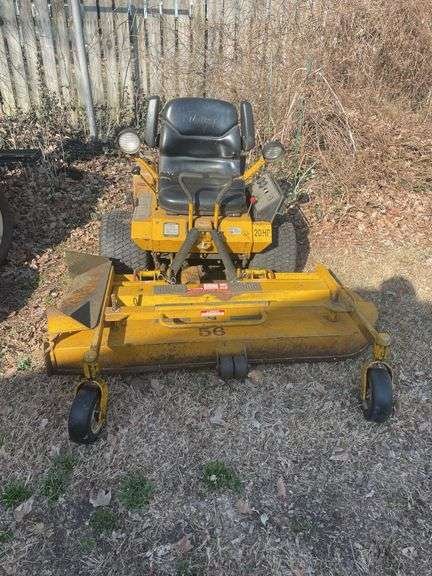
So, you’ve heard the buzz about zero-turn mowers, those sleek, powerful machines that seem to glide across sprawling lawns, leaving behind perfectly manicured stripes. But when it comes to pinpointing Who Should Buy a Walker Zero Turn Mower? (and diving deep into this target user guide), you're looking for more than just marketing fluff. You want the straight talk from someone who understands not just mowers, but also the real-world demands of property ownership.
A Walker Zero Turn Mower isn't just another piece of lawn equipment; it's a precision instrument designed for a specific kind of owner and a particular type of landscape. If you're pondering whether this high-performance machine belongs in your garage, let's cut through the grass and get to the core of it.
At a Glance: Is a Walker ZTR For You?
- Property Size: Best for 1/2 acre or more, especially with moderate landscaping.
- Obstacles: Excels at navigating trees, flower beds, and pools with speed and precision.
- Terrain: Ideal for relatively flat or gently sloping lawns (under 10 degrees).
- Time Value: Saves significant time on larger properties compared to traditional tractors.
- Investment: A premium machine ranging from $2,500-$5,000+ for homeowners.
- Skill Level: Requires a learned skill for steering, but highly intuitive once mastered.
- Maintenance: Demands consistent cleaning and seasonal tune-ups for longevity.
Beyond the Buzz: What Exactly is a Zero-Turn Mower?
Before we zero in on the "Walker" aspect, let's briefly clarify what makes any zero-turn radius (ZTR) mower stand out. These aren't your grandpa's tractors. ZTRs are engineered for serious power, unparalleled mobility, and impressive speed, especially on larger lawns peppered with obstacles. Their defining characteristic is the ability to make precise 360-degree turns, essentially spinning on a dime. This isn't just a party trick; it means less backing up, fewer missed spots, and dramatically reduced mowing time.
Instead of a steering wheel, ZTRs use distinctive lap bar controls. Each lever independently governs the speed of the wheel on that side. Push both forward, and you go straight. Push the right lever forward and pull the left back, and you pivot left. Reverse that, and you turn right. The front tires swivel freely, aiding in this incredible agility. Yes, operating a ZTR is a learned skill, especially when tackling side hills where front-end control can feel limited, but most users find it becomes second nature remarkably quickly.
Is a Walker Zero-Turn Mower Right for YOUR Lawn?
The "right" mower isn't just about horsepower; it's about matching the machine to your specific needs, property, and priorities. A Walker Zero Turn, in particular, often represents an investment in superior design, durability, and a pristine cut.
The Size and Scope of Your Property: Beyond the Half-Acre Mark
Let's be blunt: if you have a postage-stamp lawn, a zero-turn mower, let alone a Walker, is likely overkill. These machines truly shine on larger properties – think a minimum of a 1/2-acre lawn, and ideally much more. On properties stretching from one to five acres, a ZTR can shave hours off your mowing time each week.
Why the emphasis on size? Larger decks mean wider swaths of grass cut with each pass, and the speed of a ZTR allows you to cover vast areas quickly. If your property feels like a weekend project just to mow, a Walker Zero Turn is designed to turn that chore into a swift, satisfying task. The efficiency gains on smaller plots simply don't justify the cost or the learning curve.
Navigating Obstacles with Finesse: Trees, Beds, and Backyard Oases
This is where a zero-turn mower truly earns its stripes, literally. Do you have numerous trees, intricate flower beds, a swimming pool, or garden features that require meticulous trimming? A traditional lawn tractor often demands multiple passes, slow turns, and then a follow-up with a string trimmer. It’s tedious.
A Walker ZTR, with its unparalleled maneuverability, allows you to get incredibly close to these obstacles. You can circle a tree perfectly, navigate the curves of a landscaped bed, or neatly edge around a pool deck without missing a blade of grass or performing complex backing maneuvers. This precision not only saves time but also eliminates much of the frustrating detail work. If your lawn is less of a wide-open field and more of an obstacle course, a Walker is engineered for that kind of agile performance.
Taming the Terrain: Slopes and Uneven Ground
While zero-turn mowers are champions of flat and moderately contoured terrain, they aren't universally suited for extreme slopes. Properties with steep inclines (generally over 10 degrees) are better served by specialized lawn/garden tractors or ZTRs explicitly designed for sloped mowing, often featuring heavier frames, lower centers of gravity, or even all-wheel drive. The independent wheel control of a standard ZTR can make them challenging to control on significant side hills.
However, for gently rolling lawns, subtle dips, and moderate inclines, a Walker ZTR handles beautifully. Its stable platform and powerful drive system offer excellent traction and control, making quick work of varied topography without excessive effort. If your property features some undulation but nothing truly extreme, a ZTR remains a strong contender.
Time is Money (or Leisure): How Much Do You Value Speed?
Let's talk about the biggest, most tangible benefit for many homeowners: time savings. Imagine cutting your mowing time by 30%, 40%, or even 50%. A zero-turn mower, with its combination of speed and efficiency around obstacles, delivers precisely that. Larger deck sizes mean fewer passes, and the lack of three-point turns means less wasted motion.
If your weekends are precious, or you simply prefer to spend less time on yard work and more on other pursuits, the time-saving aspect of a Walker ZTR is a compelling argument. This isn't just about getting the job done faster; it's about reclaiming your personal time. For many, this efficiency alone justifies the investment.
Gateways and Tight Spots: Mind Your Width!
It might seem obvious, but the size of the machine matters when accessing certain parts of your property. If your backyard is fenced with a standard 36-inch gate, you'll need to consider a compact ZTR design to fit through. Some larger ZTRs, with their expansive decks, simply won't make the cut (pun intended).
While Walker offers various deck sizes, it's crucial to measure your access points before committing. This practical consideration often gets overlooked in the excitement of new machinery but can become a major headache if not addressed upfront.
Understanding the Walker Edge: Features That Matter
Walker Mowers have built a reputation for quality, innovative design, and a superior cut. When considering a premium brand like Walker, you're often looking at features that go beyond the basic ZTR.
Unrivaled Maneuverability: The Lap Bar Learning Curve
As mentioned, ZTRs utilize lap bar controls. This system offers incredible agility and precision that a steering wheel simply can't match. For first-timers, it can feel a bit like patting your head and rubbing your stomach simultaneously. However, the learning curve is typically short. Within an hour or two of practice in an open space, most operators become proficient.
Once mastered, the lap bars provide an intuitive extension of your will, allowing you to guide the mower with uncanny accuracy. This is a key reason why ZTRs excel at intricate landscaping. Don't let the initial unfamiliarity deter you; the reward is unparalleled control.
Built to Last: Deck Durability and Cutting Performance
The cutting deck is the heart of any mower. Walker, like other professional-grade ZTR manufacturers, often employs fabricated (10-gauge seam-welded steel) decks. These are significantly more robust and durable than the thinner stamped steel decks found on many entry-level mowers. While stamped decks are fine for occasional mowing of a few acres, fabricated decks are built for the long haul, ready to tackle many acres or even multiple properties without flinching. This means better impact resistance, less flex, and a longer lifespan.
Beyond durability, a Walker is renowned for its vacuum-like cutting performance, often resulting in a beautifully striped, pristine lawn. If a professional-grade finish is a priority, a fabricated deck and superior blade system are non-negotiable.
Safety First: Protecting Your Investment (and Yourself)
Any powerful machine demands respect, and ZTRs are no exception. Modern zero-turn mowers, especially from reputable brands like Walker, come standard with comprehensive operator presence safety features. These often include:
- Rollover Protection Systems (ROPS): Often foldable for trailering and storage, ROPS, combined with stabilizers, provides critical protection in the event of an overturn.
- Tip-Warning Systems: Alerts the operator to unsafe inclines.
- Seat Belts: Essential for keeping you within the protected zone of the ROPS.
These features aren't just regulatory requirements; they're vital safeguards. Always prioritize a mower with robust safety systems, and always use them. Your well-being is paramount. For more detailed insights into safe operation, consider exploring a zero-turn mower safety guide.
Powering Up: Engine Options & Fuel Types
While most Walker mowers are traditionally gas-powered, the ZTR market has seen an emergence of battery-powered options from brands like Ryobi, Greenworks, EGO, and Cub Cadet. These electric models offer a quieter, emission-free operation, making them attractive for environmentally conscious buyers or those with noise restrictions. They typically cost more upfront but are suitable for properties of four acres or fewer.
For larger properties or professional use, the consistent power and extended runtimes of a gas engine remain the standard. Walker, as a premium brand, focuses on high-performance gas engines known for reliability and efficiency.
More Than Just Mowing: Attachments and Versatility
A Walker Zero Turn Mower isn't just a one-trick pony. Like traditional lawn tractors, many models offer a receiver hitch, allowing you to tow trailers, aerators, or leaf collection systems. Bagging attachments or vacuums for debris are also widely available, transforming your mower into a versatile yard maintenance tool. Some innovative ZTRs even feature an integrated washing system that hooks directly to a hose, making it easy to clean grass clipping buildup from the underside of the deck – a small feature that makes a big difference in maintenance. For a deeper dive into expanding your mower's capabilities, check out resources on the best ZTR accessories.
The Investment: What to Expect When Buying a Walker ZTR
Bringing a high-quality ZTR like a Walker home is a significant financial decision. Understanding the true cost and commitment involved is key to satisfaction. For many, the question boils down to, Is a Walker Zero Turn Worth It?
Price Point Realities: Premium Performance Comes at a Price
Zero-turn mowers typically range from $2,000 to $5,000 for homeowner models, with professional models climbing significantly higher. For most homeowners looking for a capable and durable machine, the sweet spot often falls between $2,500 and $3,000. A Walker, being a premium brand, will often sit at the higher end of this range or beyond, reflecting its superior build quality, performance, and longevity.
While the initial outlay is higher than a basic riding lawn mower, consider the long-term value: reduced mowing time, a superior cut, and robust construction that withstands years of heavy use. Many dealers offer financing options to make the investment more manageable.
Beyond the Purchase: Maintenance and Long-Term Care
A Walker ZTR is a durable machine, but like any precision equipment, it thrives on consistent care. General maintenance includes:
- Regular Cleaning: Keeping the machine free of grass clippings and debris is crucial for preventing rust and ensuring optimal performance.
- Engine Tune-ups: Crucial for efficiency and longevity.
- Blade Sharpening/Replacement: Sharp blades are essential for a clean, healthy cut.
- Oil Changes: Typically once per season or every 50 hours of usage.
- Grease Fittings: Regular lubrication keeps moving parts smooth.
- Air Filter Replacement: Once a season or every 50 hours, or more frequently in dusty conditions.
Many owners learn to perform basic DIY maintenance tasks. However, for more complex service, you might need to invest in a trailer for transport to repair services. Servicing your ZTR mower at least once per season, or every 50 hours of running time, is a golden rule for maximizing its lifespan. Detailed guidance on keeping your machine in top shape can be found in a comprehensive ZTR maintenance tips guide.
Finding Your Dealer: Service and Support
When investing in a premium brand like Walker, your relationship with a local authorized dealer is invaluable. They provide expert advice, professional service, and access to genuine parts. This ongoing support can be a deciding factor, ensuring your investment continues to perform at its best for years to come. Don't underestimate the importance of reliable local service.
Common Questions & Clarity for Prospective Buyers
Let's tackle some frequently asked questions that often come up for those considering a zero-turn mower.
Can a beginner operate a zero-turn mower?
Absolutely. While the lap bar controls take a little getting used to, most beginners pick up the skill quickly, often within their first hour of operation. Start in an open, flat area to practice turns and straight lines.
Are zero-turn mowers good on hills?
They perform well on gentle slopes (under 10 degrees). However, for extreme slopes, they can be challenging to control and potentially unsafe due to their independent wheel drive and pivot steering. Specialized ZTRs or lawn tractors with a lower center of gravity are better for very steep terrain.
How often should I service my Walker ZTR?
A good rule of thumb is at least once per season or every 50 hours of operation, whichever comes first. This should include oil changes, air filter checks, blade sharpening, and lubricating grease fittings.
What's the difference between a stamped and fabricated deck?
A stamped deck is made from a single sheet of steel pressed into shape. It's lighter and more common on entry-level models, suitable for lighter use. A fabricated deck is constructed from multiple pieces of heavier gauge steel that are cut, welded, and then finished. These are much more durable, impact-resistant, and found on higher-end and commercial-grade mowers like Walker. For longevity and performance, a fabricated deck is superior. When considering choosing the right ZTR deck size, the deck construction is just as important.
Are battery-powered zero-turns viable for larger properties?
Battery-powered ZTRs are an excellent, eco-friendly option for properties up to four acres. For larger properties or continuous commercial use, gasoline-powered models still offer longer runtimes and quicker refueling. The technology for battery ZTRs is rapidly advancing, however, so this landscape is always evolving. For a deeper look, you might want to compare battery vs. gas ZTRs.
Making Your Decision: A Final Checklist
Deciding to purchase a Walker Zero Turn Mower is a significant step, one that promises to transform your lawn care experience. Before you make the leap, consider this final checklist:
- Measure Your Lawn: Is it truly 1/2 acre or larger? The bigger your property, the more you'll appreciate the ZTR's efficiency.
- Map Your Obstacles: Do you have numerous trees, flower beds, or landscape features that demand precision mowing?
- Assess Your Terrain: Is your property mostly flat or gently sloping (under 10 degrees)? Avoid extreme hills with a standard ZTR.
- Calculate Your Time Savings: How much is your time worth? A ZTR is an investment in reclaiming your weekends.
- Check Gate Access: Will your chosen deck width fit through all necessary gates and openings?
- Budget for Quality: Are you prepared for the premium investment in a durable, high-performance machine?
- Commit to Maintenance: Are you willing to provide the regular care needed to keep your Walker running optimally?
- Visit a Dealer: Test drive a ZTR to get a feel for the controls and assess the comfort.
If you've nodded along to most of these points, then a Walker Zero Turn Mower might just be the perfect partner for your lawn. It’s more than just a mower; it's a commitment to efficiency, precision, and a beautifully maintained property.